

Nakedly AI
One workspace for comparing undress engines.
Nakedly AI is built around a narrow promise: upload a photo, compare several image engines, and decide which result works best. The supplied material makes a convincing case for a simple workflow, but leaves pricing and several policy details open.
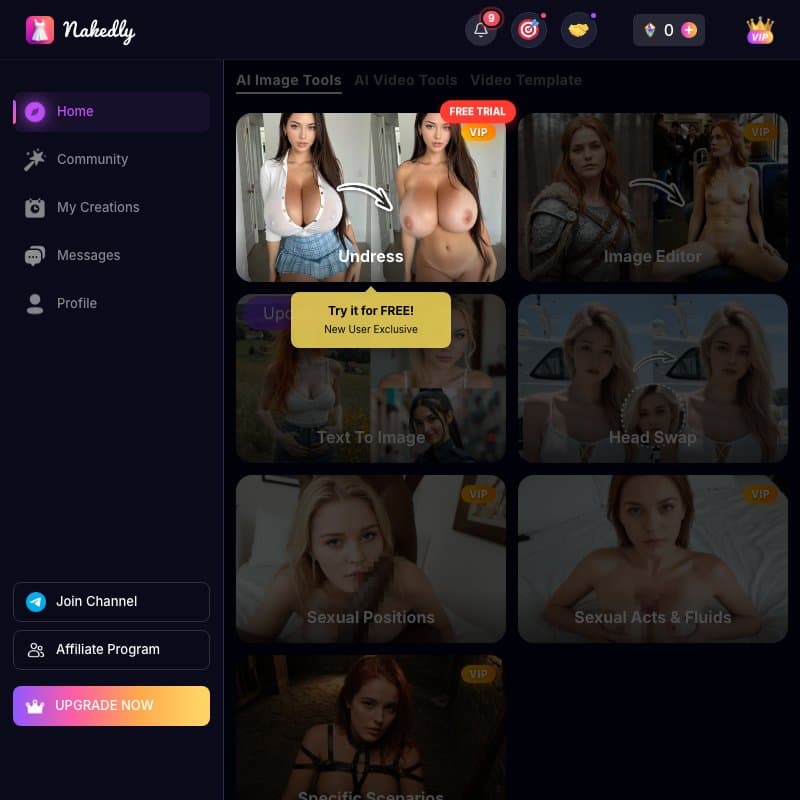
About this review: based only on the supplied written review, metadata, HTML copies, and screenshot. We have not tested an account or independently audited the service. The export has no capture date, so availability, speed, pricing, and policy claims should be treated as a snapshot.
What is Nakedly AI?
Nakedly AI is presented as a specialist image tool rather than a general creative suite. The supplied material centers on photo uploads, an in-house engine, and comparisons with other available engines. The screenshot shows a dashboard with image tools, video tools, an upload area, and account sections for creations and profile.
That focus is the product’s clearest idea. A user can run the same source image through different options instead of opening several accounts and repeating the same setup. The review says the platform is designed for consenting adult models or synthetic source images; that consent condition is essential to any responsible use of the service.
The evidence is mostly descriptive. The export includes no test set, output files, measured timings, or current price table. Claims about realism, speed, and privacy should therefore be read as statements repeated by the source, not as independently verified results.
What holds up. What’s missing.
Pros
Comparison is the main feature
The source describes running one photo through multiple engines and judging the results in one workspace.
A focused workflow
The supplied review says the core flow stays to upload, choose an engine, generate, and compare.
Repeat attempts are part of the design
The source explicitly says the same upload can be run again because results vary between attempts.
Browser-based access
The review describes the service as usable in modern mobile and desktop browsers without a dedicated app.
Low-friction trial described
The source says initial comparisons do not require a card or heavy signup.
Limitations are acknowledged
The supplied review openly discusses input quality, output variation, and the service’s narrow specialization.
Cons
Input quality still matters
The source says even lighting, clear crops, and full-length images tend to work best.
Results can vary
The same photo may produce different results on another attempt, so a first render is not necessarily representative.
Pricing is opaque
The export mentions paid tiers but provides no current prices, credit values, or subscription levels.
The scope is deliberately narrow
The review describes no text-to-image or motion workflow as part of the core product promise.
The limits behind the feature list
Engine comparison
The source describes side-by-side testing across different engines, with the in-house option presented as a fallback.
Photo compatibility guidance
The supplied review says clear, evenly lit, full-length photos and ordinary selfies are the most useful starting points.
Mobile and desktop browser use
The export describes the same browser workflow on phones and larger screens, with no installation requirement.
Private gallery and account areas
The review describes a dashboard for creations, profile controls, and access to generated renders, but those areas were not tested.
Nakedly AI pricing: what credits tell you
The source describes a free comparison path without a card, followed by paid tiers for higher volume and possibly priority processing. It does not provide a current price list, credit schedule, subscription term, or a clear limit for the initial trial.
That makes a value calculation impossible. A free trial can be useful for checking whether the engines suit a particular photo, but the export does not say how many generations it includes or what a normal paid workflow costs.
Before paying, a reader should confirm the current tier names, included generations, priority rules, expiry terms, refunds, and what happens when an output fails. None of those details are specific enough in the supplied files to summarize as settled facts.
What happens to personal images?
The privacy position is clear in the copy
The supplied review says uploads and generated results receive no human review, are not used for training, and can be managed through an account that requires only an email. It also describes discreet billing and a private gallery. These are service claims repeated in the export, not findings from an audit.
Legal documents still matter
The export refers readers to the full terms and privacy policy but does not quote retention periods, deletion procedures, subprocessors, or a complete reporting process. The absence of a red flag in the supplied material is not proof that every privacy question has been answered.
Consent is part of the workflow
The source frames use around consenting adult models and synthetic source images. That is the relevant standard: a public or easily accessible photograph is not automatically permission to create sexualized imagery of the person shown. The supplied files do not document how consent is enforced or how misuse reports are handled.
The verdict on Nakedly AI
This looks most useful for someone who wants a narrow image workflow and prefers to compare options before committing to one engine. The focused interface, repeat attempts, and claimed no-card trial lower the initial friction. The screenshot also suggests a broader dashboard than a single upload form, with separate image and video areas and account history.
The limits are just as practical. The result depends on the starting photo, outputs vary, paid tiers are not itemized, and the service is intentionally specialized. Treat the privacy language as a set of claims to verify in the current policy, and confirm the actual trial and billing terms before uploading sensitive material or paying.